They say seeing is believing. In the woods, experience is knowing. Until you have spent a few nights making camp with one knife, it is hard to tell which knife is for you. The terms came into common use in the 1980s, when the Canadian instructor Mors Kochanski published Bushcraft and set out, in detail, how to live in the northern forest with very little gear. His approach drew the line between the knife that does the fine work and the knife that does the hard work, and that line still holds. Understanding it can be the difference between a comfortable camp and a long night.
Every Bushcraft Knife Is a Survival Knife
All bushcraft knives are survival knives, but not all survival knives are bushcraft knives. The difference is size and the tasks each is asked to do. A bushcraft knife is the smaller of the two, with a blade of 3 to 5 inches, and it does delicate work: carving, feathering tinder, setting a trap trigger, dressing game. A survival knife is the bigger sibling at 5 to 10 inches, and it batons, chops, digs and pries. Both are full-tang fixed blades in carbon or stainless steel with a handle shaped to be held for hours. Your surroundings decide which you need. On a weekend trip a compact bushcraft knife is all you will use. In the Wrangell Mountains you want the big one.
The Bushcraft Knife: The Task Knife
This subset of survival knives handles the lighter, essential chores: trimming cord, shaving tinder, carving wood, dressing game, starting a fire. Light tasks still call for a stout knife with an edge that holds, and the best bushcraft knives are plain, hardy and reliable rather than clever.
Blade dimensions. About 3 to 5 inches long and 1/16 to 1/8 inch thick: thin enough to carve, thick enough to baton kindling.
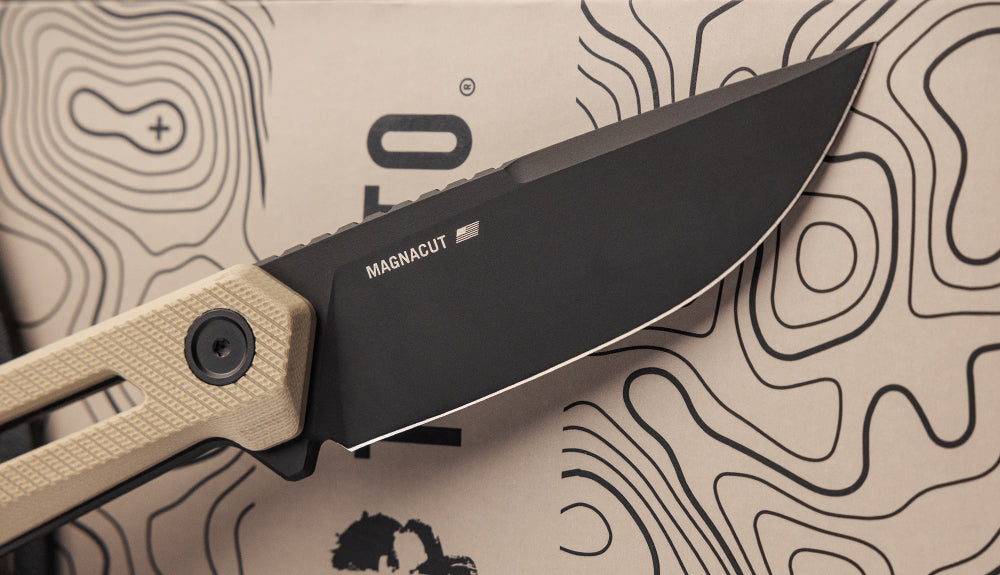
Blade type. A full-tang fixed blade with no moving parts. Plenty of sites list folding and automatic knives as bushcraft knives. For carving and food they are fine, and for batoning they are not. A full tang runs the length of the handle in one piece of steel, so a strike on the spine has mass to travel through. A pivot and a lock do not have that mass, and that is where they break. It is physics, not a knock on folders. The X1 Atlas, a 3.30-inch MagnaCut fixed blade in a Kydex sheath, is the knife we make for this job.
The Survival Knife: One Life, One Knife
This is the one-tool kit in a sheath, the knife for the country of bears and wolverines. The best survival knives take the hardest jobs, digging, chopping, splitting, and are built to do it without bending, chipping or losing the edge.
Blade dimensions. Anything from 5 to 10 inches, well balanced, with the length set by the work and by preference. There is no wrong answer. Thickness should be at least 1/8 inch and up to 1/4, because the blade has to take impact.
Blade type. A fixed blade, always. Plain or partly serrated. Many people like a serrated section near the handle for sawing through rope and tough fiber, and our serrated vs plain edge guide lays out the trade.
Which One to Carry
Most people are better served by the bushcraft size and a folder in the pocket as the second knife, because the fine work comes up every day and the chopping comes up once a trip. If the trip is long, cold or far from help, step up to the survival size and accept the weight. Either way, the hunting knife guide covers the blade shapes and steels that work in the field.
The Fixed Blade, and the Folders That Back It Up
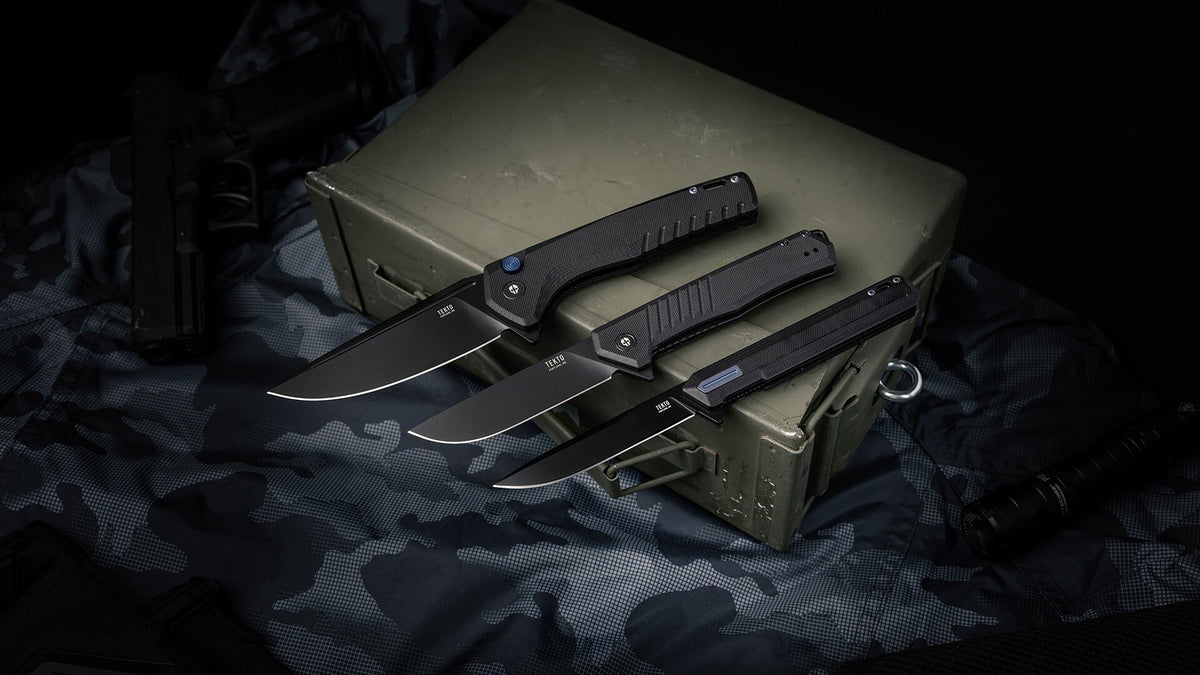
The X1 Atlas is the bushcraft-sized fixed blade. The folders ride in the pocket as the second knife.


People Are Asking
What is the difference between a bushcraft knife and a survival knife?
Size and job. A bushcraft knife is a 3-to-5-inch fixed blade for carving, feathering tinder, dressing game and camp chores. A survival knife is 5 to 10 inches and thicker, for batoning, chopping and prying. Every bushcraft knife is a survival knife. The reverse is not true.
Can a folding knife be a bushcraft knife?
For carving and food prep, yes, and a good folder is the knife most people actually have with them. For batoning or anything that hammers on the spine, no: a pivot and a lock are not a full tang, and that is where folders break.
What blade length is best for bushcraft?
About 4 inches. Long enough to baton small kindling and slice food, short enough for tip control when carving a notch or a trap trigger. The X1 Atlas at 3.30 inches sits at the compact end of that range.
Which steel is better for a field knife, carbon or stainless?
Carbon steels take a keen edge and throw a spark off a ferro rod. Stainless and the newer powder steels such as MagnaCut hold an edge nearly as well and do not rust in a wet pack. For most people the rust resistance wins.