When a Knife Needs Sharpening
Three tests, in order of effort. Paper: hold a sheet by one corner and slice down through it. A sharp edge glides and leaves a clean cut, a dull one snags, tears or slides off. Plastic: lay the edge on a smooth plastic surface such as a pen barrel or a straw and tilt it. A sharp edge bites at once, a dull one skates. A sharpness tester, if you have one, gives a number. The lower, the sharper, and a working pocket knife sits in the low hundreds.
The second thing to learn is the difference between a knife that needs a touch-up and one that needs sharpening. An edge that has rolled or lost its bite comes back in a dozen strokes on a ceramic rod. An edge that has gone blunt, chipped or been sharpened badly before needs the stone.
The paper test, the plastic test and a sharpness tester, on an F1 Alpha and an F2 Bravo.
The Angle
TEKTO blades are ground at about 20 degrees per side, and that is the angle to sharpen them at. Hold the angle the factory put on the knife and sharpening is quick. Change it and you spend the session regrinding steel before the edge even meets the stone. To find 20 degrees without a guide, stand the blade upright on the stone at 90, tilt it to half of that for 45, then half again for a little over 20. To check it, color the bevel with a marker, take one light stroke, and look: if the ink is gone from the whole bevel you have the angle. Gone only at the edge, you are too steep. Gone only at the shoulder, too shallow.
What You Need
| Tool | What it does | Who it is for |
|---|---|---|
| Bench stone, two grits (coarse around 300 to 400, fine around 1,000), or a diamond plate | Resets and refines the edge. The method in the video | Anyone willing to learn the angle by hand |
| Guided bench stone or clamp system with angle guides | Holds the angle for you | Beginners, and anyone who wants the same result every time |
| Ceramic rod | Touch-ups between sharpenings. Serrations | Everyone. The tool you will use most |
| Leather strop, bare or with compound | Polishes the edge and removes the last of the burr | Optional. The difference between sharp and scary sharp |
| Marker, towel, water or oil for the stone | Angle check, mess control, lubrication |
One thing to skip: the pull-through sharpener with carbide blades. It scrapes steel off at a fixed angle, leaves a ragged edge, and shortens the life of a good blade. On a cheap knife it is fine. On a TEKTO it is the one tool we ask you not to use.
Sharpening on a Stone, Step by Step

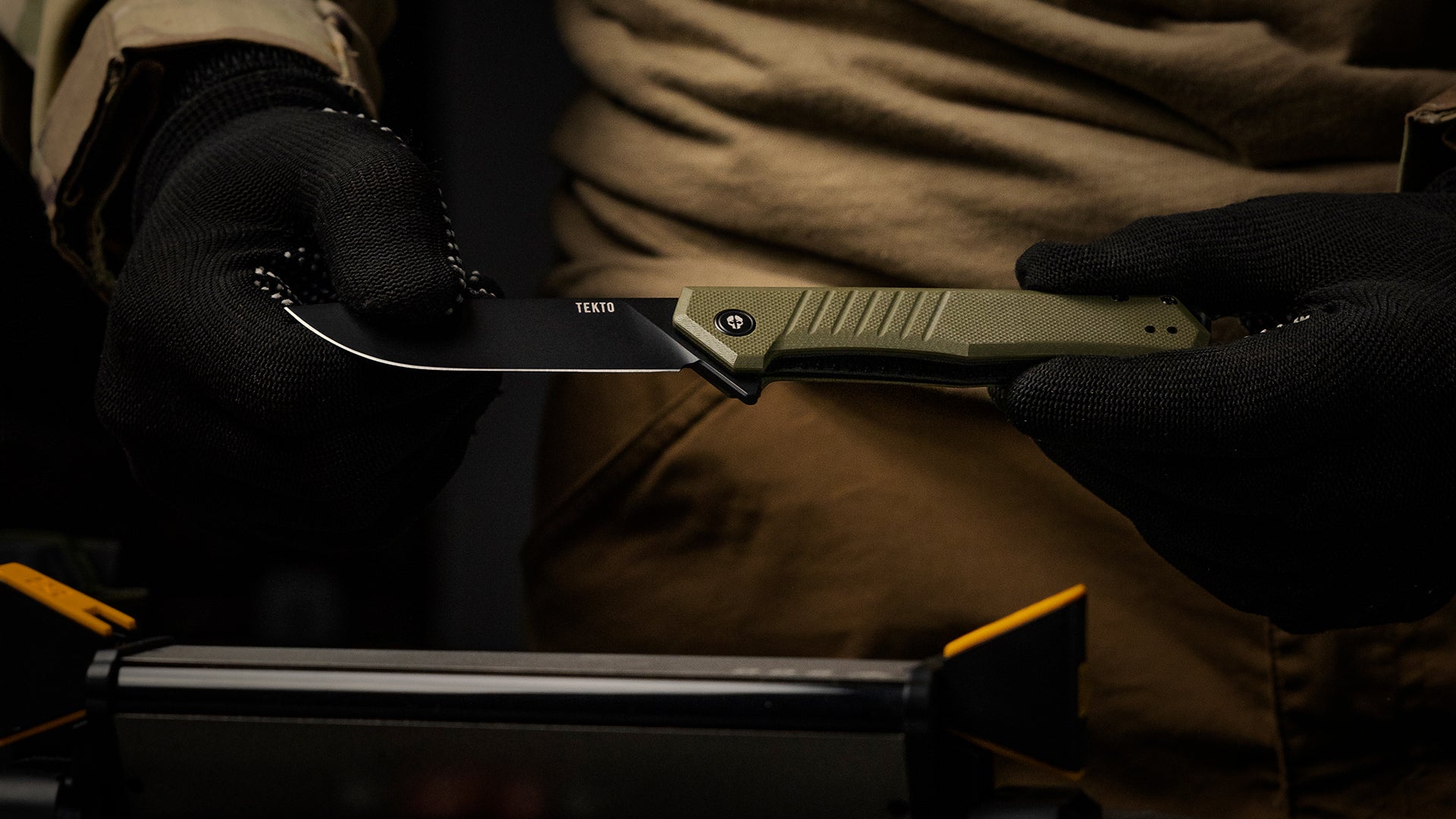
A guided bench stone at 20 degrees: coarse, fine, ceramic, then a leather strop, on an F1 Alpha.
- Set up. Soak a water stone for the time its maker says, or wet a diamond plate. Lay a towel under it. Put the coarse side up.
- Set the angle. Lay the blade on the stone with the heel nearest you, edge facing away, and tilt the spine up to 20 degrees. Use the marker check if you are unsure.
- Stroke. Push the blade across the stone from heel to tip as if slicing a thin layer off it, light and even, keeping the angle through the whole stroke. Five to ten strokes.
- Raise a burr. Keep going on that side until you can feel a fine lip of metal along the opposite side of the edge, by dragging a fingertip away from the edge, never along it. The burr means the two bevels have met.
- Switch sides. Same number of strokes, same angle, until the burr moves to the first side.
- Refine. Move to the fine grit and repeat with lighter pressure, alternating sides, fewer strokes each time. Finish with a few strokes at almost no pressure.
- Strop. Ten to fifteen passes per side on leather, spine leading, same angle. This takes the last of the burr off and polishes the edge.
- Test. Paper first. If it snags, the burr is still there: a few more light alternating strokes on the fine grit and the strop.
Using a Guided System
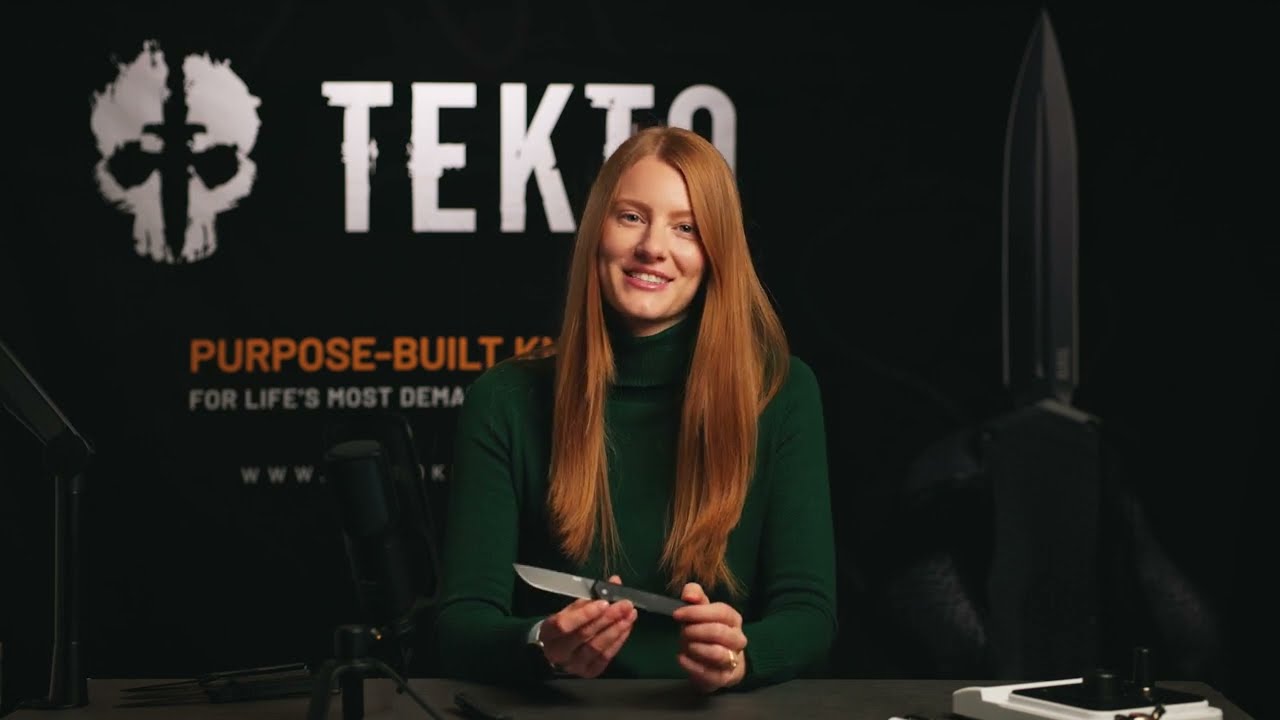
A guided bench stone or a clamp-and-rod system does the hard part, which is holding the angle, and the method is otherwise the same: coarse until a burr, switch, fine, strop. Set the guide to 20 degrees for a TEKTO. The trade is speed for learning: you will never sharpen on a rock by a river with a clamp, but you will get a consistent edge the first time. The video uses a guided bench stone with built-in 20-degree guides, and it is a good first system.
Touching Up With a Rod
Most of the time a knife does not need sharpening. It needs its edge straightened. A ceramic rod does that in under a minute: hold the rod upright, lay the edge against it at 20 degrees, and draw the blade down and across, heel to tip, alternating sides, ten strokes each. Do this every couple of weeks of daily carry and the stone comes out two or three times a year instead of monthly. It is the single habit that keeps a knife sharp.
Stropping
A strop is a strip of leather, bare or dressed with a fine compound. Drag the blade across it spine first, edge trailing, at the sharpening angle, ten to twenty passes a side. It does not remove steel in any useful amount. It aligns the very apex of the edge and takes off the last microscopic burr, which is the difference between an edge that cuts paper and one that shaves. An old belt works. Strop after every sharpening and whenever the edge feels slightly off.
Sharpening by Steel
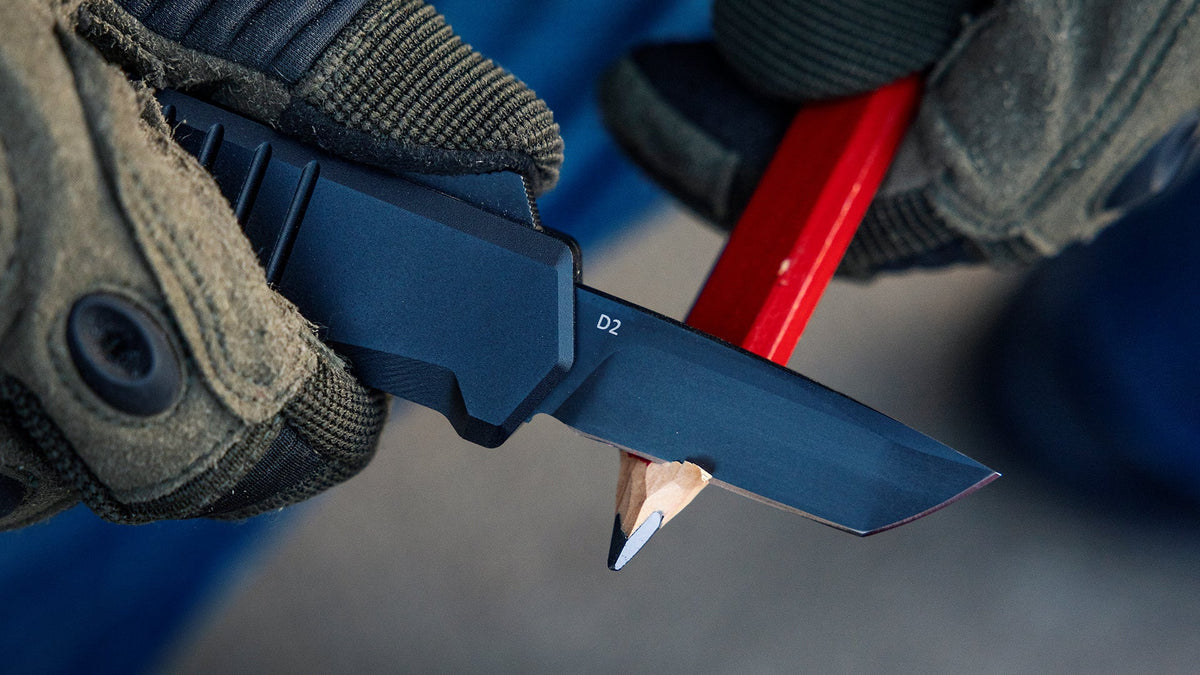
The steel changes how the method feels, not what it is. D2, on the F1 Alpha, F2 Bravo, F3 Charlie, A3 Delta and A2 Badger, is a high-carbide tool steel that is slow on soft stones. A diamond plate or a ceramic rod cuts it cleanly, and it rewards patience with a long-lasting edge. S35VN, on the A5 Spry, A5 Spry Mini, A7 Zastava and F4 Echo, sharpens more easily than D2 and holds a fine, clean edge. MagnaCut, on the X1 Atlas, is harder still and takes diamond best. It does not need sharpening often. On every coated TEKTO blade, the coating stops at the bevel: the edge is bare steel and sharpening does not touch the coating as long as you hold the angle. Grinding the bevel wider than the factory did will cut into it.
Serrated and Tanto Blades
A serrated edge is sharpened one scallop at a time with a tapered ceramic or diamond rod that fits the gullet, from the beveled side, then a light pass on a fine stone on the flat side to clear the burr. It takes longer and needs doing far less often. A tanto has two straight edges meeting at a corner. Sharpen each as its own short flat edge, lifting the blade off the stone at the corner rather than rolling through it. Rolling through rounds the corner off, and the corner is the point of a tanto.
Mistakes That Ruin an Edge
| Mistake | What it does | Instead |
|---|---|---|
| Changing the angle mid-stroke | A rounded, convex bevel that will not get sharp | Lock your wrist. Use a guide until the angle is in your hands |
| Pressing hard | Scratches, heat, a thick burr that will not come off | Let the stone cut. The last strokes at no pressure |
| Skipping the burr | Two bevels that never meet. A knife that feels sharp and is not | Feel for it before you switch sides |
| Pull-through carbide sharpeners | A ragged edge and a shortened blade | A rod for touch-ups, a stone for sharpening |
| Sharpening when it only needed honing | Steel gone for nothing | Paper test first. Rod before stone |
| Lifting the tip at the end of the stroke | A rounded tip | Follow the belly around, keep the angle to the end |
| A dry stone | A loaded, glazed stone that stops cutting | Water on a water stone, water or light oil on diamond |
TEKTO Sharpens TEKTO Knives
If you would rather not, or the edge has been chipped or ground badly, TEKTO sharpens TEKTO knives at the Maine workshop. Email support@tektoknives.sbs or use the contact page to arrange it, and keep in mind that improper sharpening is one of the things the warranty does not cover, so a chip from a bad session is a repair rather than a claim.
The Steels in This Guide
D2 on the F1 Alpha and F2 Bravo, S35VN on the A5 Spry, MagnaCut on the X1 Atlas: one of each.


People Are Asking
What is the best thing to use to sharpen a pocket knife?
A two-grit bench stone or a diamond plate, plus a ceramic rod for touch-ups. If you are new to it, a guided bench stone with angle guides gets you a consistent edge from the first try. Avoid pull-through carbide sharpeners on a good blade.
What angle should I sharpen a pocket knife at?
Match the factory edge. TEKTO blades are ground at about 20 degrees per side. Most pocket knives sit between 15 and 20. Holding one angle through every stroke matters more than which angle you pick.
What grit should I use to sharpen a pocket knife?
Coarse, around 300 to 400, to reset a dull or damaged edge and raise a burr. Fine, around 1,000, to refine it. Then a strop. For a touch-up, skip the coarse grit and go straight to the fine stone or a ceramic rod.
How do I sharpen a pocket knife without a sharpening stone?
A ceramic rod or the unglazed ring on the bottom of a ceramic mug will straighten an edge. A leather belt will strop it. Fine wet-and-dry sandpaper taped to a flat surface works as a stone in a pinch. None of them replaces a stone for a blade that is truly dull.
Can pocket knives be sharpened?
Yes, every one of them, including automatics and OTFs. Sharpen an OTF with the blade locked out and the handle held firmly. Sharpen a folder open and locked. The steel and the angle are what matter, not the opening mechanism.
How often should I sharpen a pocket knife?
Touch it up on a rod every couple of weeks of daily carry and it will need the stone two or three times a year. Sharpen when the paper test snags, not on a schedule.
How do I know when my knife is sharp?
It slices a sheet of paper cleanly from the corner without snagging, bites into a pen barrel instead of skating, and the burr is gone from both sides when you draw a fingertip away from the edge.
How do you sharpen a serrated pocket knife?
One scallop at a time with a tapered ceramic or diamond rod that fits the gullet, working the beveled side, then one light pass on a fine stone along the flat side to clear the burr.
Can you sharpen an X-Acto or craft blade?
You can touch one up on a fine stone or a strop, but a craft blade is thin, cheap and meant to be replaced. A fresh blade is sharper than any resharpened one. Save the stone for the knife you keep.