What a Serrated Edge Is
A serrated edge, also called a serrated blade or a toothed edge, is a cutting edge ground into a row of scallops and points instead of one straight line. The points are the teeth. The scallops between them are the gullets. Each tooth concentrates the force of your pull onto a tiny area, so the edge bites into material that a smooth edge would slide across, and each gullet is a short, protected curve of edge that keeps cutting after the points have worn. A plain edge, also called a straight edge or fine edge, is the opposite: one continuous bevel from the heel to the tip, with nothing to catch on and nothing to protect it.
How Each Edge Cuts
A plain edge works by pressure. You push it into the material and the thin apex wedges the fibers apart. The cut is as clean as the edge is sharp. It is the better edge for anything that needs a clean line, anything you push rather than pull, and anything you want control over: cardboard, food, wood, cord held under tension, a seam.
A serrated edge works by pressure and motion. The teeth bite, the gullets slice as you draw the blade, and the whole edge saws. That is why it goes through rope, webbing, seatbelt, fibrous plants and crusty bread with less force than a plain edge, and why it keeps going after it has lost its keenness: a dull serrated edge still has points to catch with. The price is the cut itself, which is ragged, and the loss of control on anything that needs a push cut.
What Serrated Knives Are Used For
Rope, cord and webbing, where the teeth stop the material from sliding ahead of the blade. Rescue and emergency cutting, where a seatbelt or a jacket has to be opened fast and neatly does not matter. Bread and anything with a hard outside and a soft inside, which is why the kitchen bread knife is serrated. Fibrous vegetation, cardboard in bulk, carpet, hose and plastic strapping. In short: tough, fibrous or slick material, cut by pulling.
What Plain Edges Are Used For
Everything else, which is most of what a pocket knife does. Opening packages cleanly, whittling and carving, food preparation, trimming, scraping, any cut where the result has to look right, and any cut where you need to feel the material through the edge. A plain edge is also the easier edge to keep sharp, which matters more than any single cutting task: a sharp plain edge beats a dull serrated edge on everything but rope.
The Combo Edge
A partially serrated or combo edge puts an inch or so of serrations at the heel, nearest the handle, and leaves the rest plain. The idea is one knife for both jobs, and it works in the specific case where you cut rope often enough to want teeth and cleanly enough to want a plain tip. The trade is that both sections are shorter: less plain edge for slicing, fewer teeth for sawing. It is a working compromise rather than the best of both, and it is the right choice for people who know they will cut cord, strapping or webbing most days.
Sharpening a Serrated Edge
This is where the plain edge earns its keep. A plain edge sharpens on any stone, rod or guided system in a few minutes. A serrated edge has to be sharpened one gullet at a time with a tapered round rod, ceramic or diamond, that matches the radius of the scallops, working from the beveled side and then removing the burr from the flat side with a light pass on a fine stone. It takes longer, it takes a tool most people do not own, and the points wear down over the years into something closer to a wavy plain edge. The consolation is that it needs doing far less often. Our sharpening guide covers both.
Which Edge Should You Carry?
For one knife, the plain edge. It does more jobs, does them more cleanly, sharpens in minutes, and a sharp one handles rope well enough. For a second knife that lives in a truck, a boat, a pack or a rescue kit, the serrated or combo edge, where the material is tough and the finish does not matter. For a working knife that meets cord and strapping every day, the combo edge. The one thing not to do is carry a serrated knife because it looks aggressive. It will frustrate you on the first box you open.
| Plain edge | Serrated edge | Combo edge | |
|---|---|---|---|
| Also called | Straight edge, fine edge | Serrated blade, toothed edge | Partially serrated |
| Cuts by | Pushing | Sawing | Both, in two sections |
| Best on | Cardboard, food, wood, cord under tension | Rope, webbing, seatbelt, bread, fibrous plants | Mixed work with daily cord cutting |
| Cut quality | Clean | Ragged | Depends on the section |
| Control | High | Low | Medium |
| Stays usable when dull | No | Yes | Partly |
| Sharpening | Any stone, minutes | Tapered rod, one gullet at a time | Both methods |
| Carry it as | Your one knife | A second knife for tough material | A working knife |
TEKTO's Serrated Options
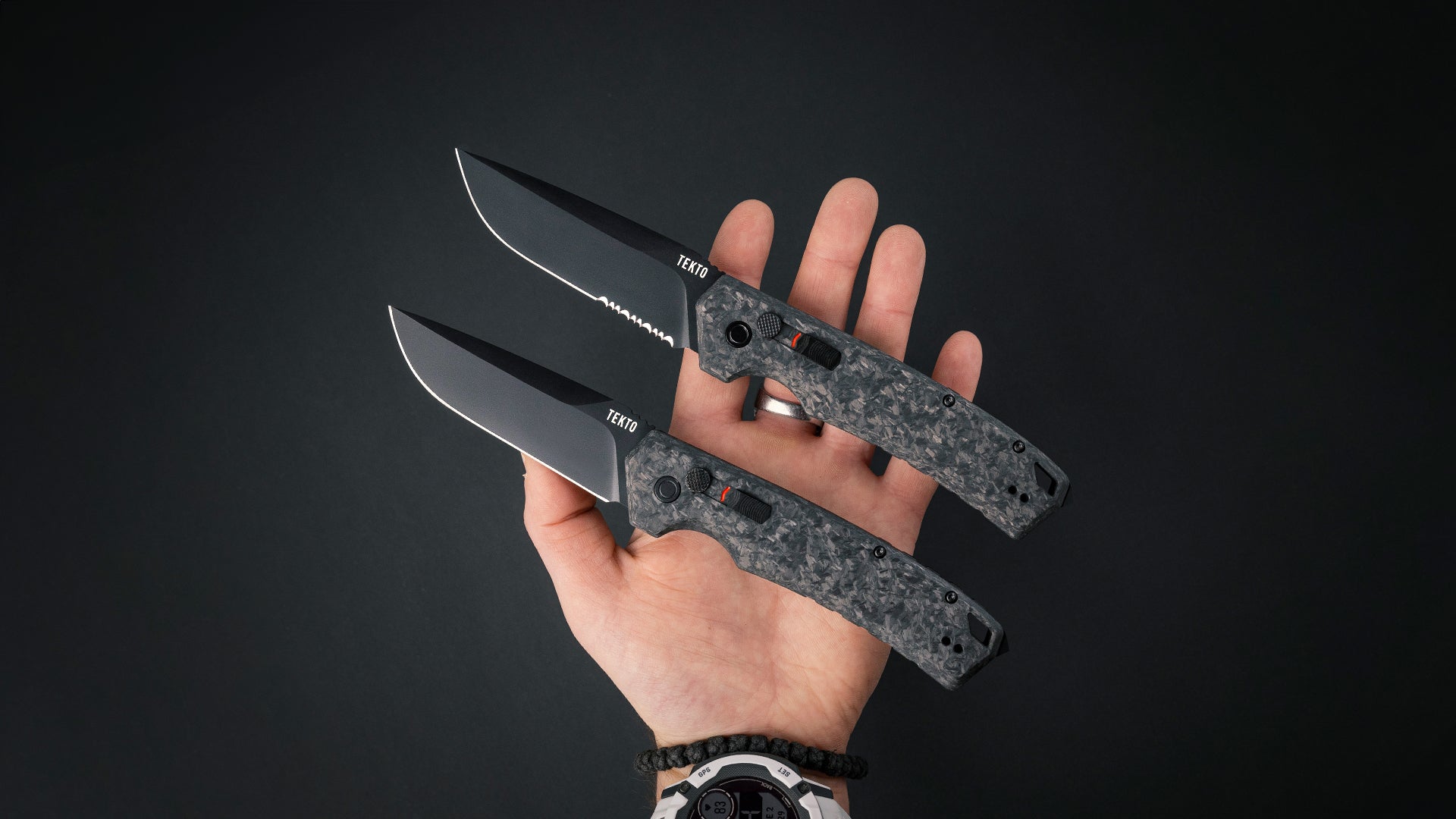
Most TEKTO blades are fine edge, which is the plain edge under another name. Two models offer teeth: the A3 Delta automatic in its Serrated blade option, and the A4 OTF, whose double-edge blade carries serrations. The A5 Spry, A5 Spry Mini, A2 Badger, A7 Zastava, the F-series folders and the X1 Atlas are plain edge. If you want one TEKTO for everything, choose the fine edge. If cord and strapping are your daily work, the serrated A3 Delta pairs a strong drop point tip with teeth at the heel.
Fine Edge, and One With Teeth
The A3 Delta is the one with a Serrated option. The other three are plain edge.


People Are Asking
Is it better to use a serrated or non-serrated knife?
For most jobs, non-serrated. A plain edge cuts cleanly, gives you control, and sharpens in minutes. A serrated edge is better on rope, webbing, bread and other tough or fibrous material, and it keeps working after it has dulled. If you carry one knife, make it plain. If you cut cord every day, carry teeth too.
What are serrated knives used for?
Sawing through material that a smooth edge slides across: rope, cord, webbing, seatbelts, crusty bread, fibrous plants, carpet, hose and plastic strapping. The teeth bite and the scallops between them slice as you pull.
What do serrated edges mean on a knife?
That the edge is ground into a row of points and scallops instead of one straight line. The points concentrate force so the edge bites. The scallops are short curves of edge that keep cutting after the points wear. It is a saw in the shape of a knife edge.
What is the serrated edge of a knife called?
The edge itself is called serrated or toothed. The points are teeth and the curves between them are gullets or scallops. A blade with teeth only near the handle is a combo edge or partially serrated edge.
What do you call a knife that is not serrated?
A plain edge, straight edge or fine edge. The three terms mean the same thing: one continuous cutting bevel with no teeth. TEKTO's product pages use "Fine Edge".
Are serrated or straight steak knives better?
Straight, if you keep them sharp: a plain edge cuts meat cleanly without tearing. Serrated steak knives are popular because they keep cutting after years without sharpening, not because they cut better.
How do you sharpen a serrated knife?
One scallop at a time, with a tapered round rod, ceramic or diamond, that matches the radius of the gullet. Work the beveled side of each scallop, then take the burr off the flat side with a light pass on a fine stone. It is slow, which is why a serrated edge is sharpened rarely.
Are serrated knives better for survival?
They are better at the specific survival jobs that involve rope, webbing and fibrous plants, and worse at carving, food, feather sticks and anything that needs a clean cut. Most experienced outdoors people carry a plain edge and add a serrated or combo blade only for water, rescue or rigging work.