What a Ballistic Knife Is
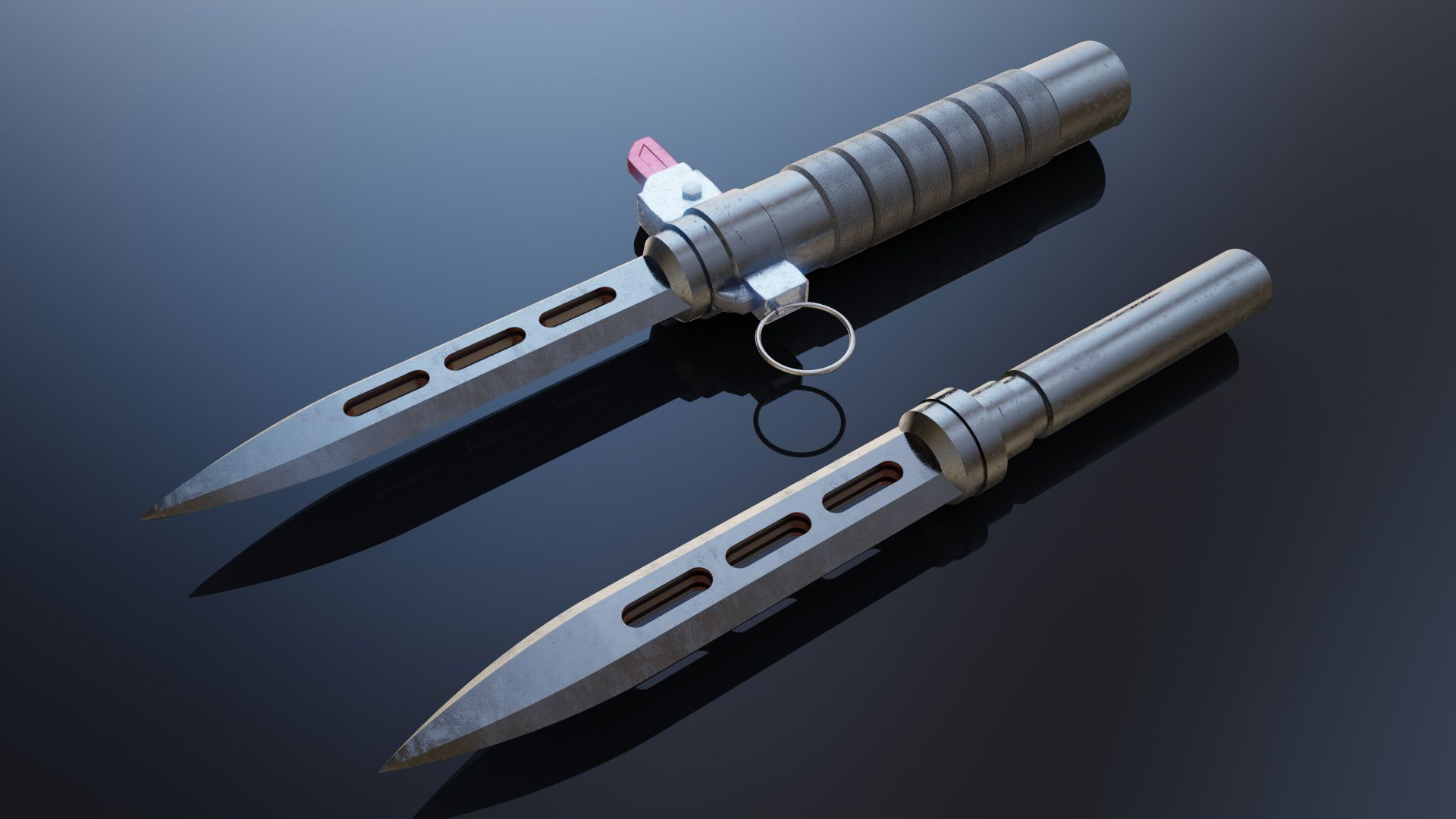
A ballistic knife is a knife with a detachable blade that is propelled by a spring-operated mechanism. That is the federal definition, word for word, and it is the whole story. The blade sits in a hollow handle on a compressed coil spring held by a pin or catch. Pull the pin or press the lever and the spring throws the blade clear of the handle. A few designs have used compressed gas instead of a spring.

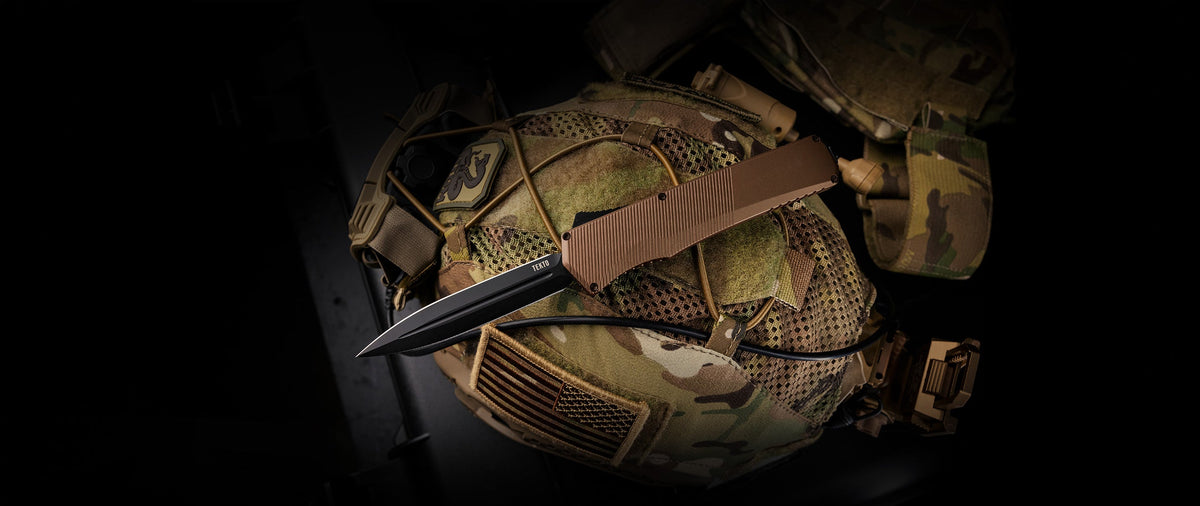
An OTF knife looks similar at rest and behaves nothing like it. Its blade slides out on a track, locks, and slides back in. It never leaves the handle. That single difference, attached or detached, is why the two are treated so differently by every law that mentions them.

How It Works, and Why It Was Built
The spring in a ballistic knife is strong enough to send the blade a few feet with any accuracy, and not much further with any force. Once it has fired, the knife is a hollow handle until the blade is recovered and the spring is reset by hand. Designs of this kind appeared in the United States in the early 1980s, mostly sold as a "KGB" or Spetsnaz knife on the strength of Cold War stories that have never been documented. They were novelties then and they are collector pieces now. Knife Rights, which tracks knife law, has found no violent crime in the United States committed with one.
The Federal Ban
The Ballistic Knife Prohibition Act of 1986 added 15 USC 1245 to the Federal Switchblade Act of 1958 (Pub. L. 85-623) as its section 7, through Pub. L. 99-570, and Congress tightened it in 1988 through Pub. L. 100-690. It makes it a federal crime to knowingly possess, manufacture, sell or import a ballistic knife in or affecting interstate commerce, in a U.S. territory, in Indian country or on federal property. The penalty is a fine, up to ten years in prison, or both. Possessing or using one during a federal crime of violence carries a separate sentence of five to ten years. The exceptions are the same as for switchblades under 15 USC 1244: the armed forces and government agencies, and manufacture or sale to them. A separate postal statute, 18 USC 1716, makes the knives nonmailable.
The ban passed in a single session. Senator Alfonse D'Amato introduced it in April 1986 after testimony, never corroborated, that a ballistic knife could defeat police body armor. In September it was attached to the Anti-Drug Abuse Act and signed into law in October.
The State Bans
Ten states prohibit possession of a ballistic knife outright: California, Colorado, Florida, Illinois, Indiana, Iowa, New Jersey, New York, North Carolina and Ohio, where it is "dangerous ordnance" under R.C. 2923.11. Massachusetts bans carrying one on the person or in a vehicle under c. 269 section 10(b), and Virginia bans selling one, possessing one with intent to sell, and carrying it concealed under 18.2-311 and 18.2-308. Idaho and Pennsylvania, often listed with them, ban no knife by type. California's rule is PC 21110, which puts the ballistic knife on the state's list of generally prohibited weapons. Our California guide covers the rest of that list. Washington's switchblade statute defines a "spring blade knife" loosely enough that a ballistic knife may fall under it. In the remaining states there is no knife-specific ban, but the federal rule still applies to any knife that has crossed a state line, which in practice is nearly all of them.
Ballistic Knife, OTF, Switchblade: Side by Side
| Ballistic knife | OTF automatic | Side-opening switchblade | |
|---|---|---|---|
| How the blade moves | Fired out of the handle and detaches | Slides straight out on a track, stays attached | Swings out on a pivot, stays attached |
| Reset | By hand, after recovering the blade | Pull the slider back | Fold the blade closed |
| Federal law | Banned in interstate commerce | Import and interstate sale restricted. Ownership legal | Same as OTF |
| State law | Banned outright in 10 states | Legal in most states, blade-length limits in a few | Same as OTF |
| Sold by TEKTO | No | Yes | Yes |
Our guide to the types of switchblades covers the two legal designs in detail.
Penalties
| Offense | Law | Maximum |
|---|---|---|
| Possessing, making, selling or importing one in interstate commerce | 15 USC 1245(a) | 10 years in federal prison and a fine |
| Possessing or using one in a federal crime of violence | 15 USC 1245(b) | 5 to 10 years, in addition to the underlying crime |
| Possession in California | PC 21110 | Wobbler: up to a year in county jail as a misdemeanor. 16 months, 2 or 3 years as a felony |
| Possession in the other eleven ban states | State weapons statutes | Varies. Most treat it as a misdemeanor, several as a felony |
Why It Stayed Banned When Switchblades Did Not
Over the last fifteen years most states have repealed their switchblade bans, and automatic knives are now legal to own in most of the country. Ballistic knives were left out of every one of those reforms. The reasons are practical rather than legal: nobody carries one for work, no manufacturer of standing makes one, and the groups that lobby for knife law reform have spent their effort on the tools people use every day. A ban that affects a handful of collectors and no working knife owners has no constituency to repeal it.
What to Carry Instead
If what you want is a blade that deploys at the press of a button, that is an automatic knife, and it is legal to own in most states. An OTF gives you the straight-out action with the blade attached and locked. A side-opening automatic gives you a folder's strength. Our OTF guide explains the mechanism and our 50-state guide tells you what your state allows.
The Legal Way to Get the Button
Three OTFs and a side-opener. The blade stays attached on every one.


People Are Asking
Can you own a ballistic knife in the United States?
In ten states, no, and Massachusetts and Virginia restrict carrying or selling one. Everywhere else there is no state ban, but federal law prohibits possessing one that has moved in interstate commerce, and there is no legal way to buy one from a dealer. In practice, ownership is limited to pieces that predate 1986 and have never left their state.
Why are ballistic knives illegal?
Congress banned them in 1986 after testimony that the launched blade could defeat police body armor. The claim was never corroborated, but the ban passed as part of a larger anti-drug bill and has never been revisited.
How much does a ballistic knife cost?
They are not sold through legal channels, so there is no market price. Listings that use the name are almost always airsoft props, replica handles with no spring, or ordinary spring-assisted folders sold under a misleading name.
What is the most banned knife in the world?
In the United States it is the ballistic knife: the only knife banned by federal statute for possession, and banned outright in ten states. Other countries ban other designs. The United Kingdom, for example, bans switchblades, gravity knives and disguised knives.
Is a ballistic knife the same as an OTF knife?
No. An OTF blade slides out of the handle and stays attached. A ballistic knife fires the blade off the handle entirely. OTF knives are legal to own in most states. Ballistic knives are not.
Does TEKTO make ballistic knives?
No. TEKTO makes OTF and side-opening automatics, manual folders and a fixed blade, all of which are legal to own in most of the country.
Sources
- 15 USC 1245 Ballistic knives: definition, prohibition and penalties
- 15 USC 1244 Exceptions carried over from the Federal Switchblade Act
- 18 USC 1716 Nonmailable items
- CA PC 21110 California's ballistic knife prohibition
- Knife Rights Ballistic knife legality and background, including the list of state bans
Checked against the U.S. Code at Cornell's Legal Information Institute and the California Legislative Information site on October 11, 2026. This page summarizes the law for general information and is not legal advice. For your own situation, talk to an attorney in your state.
How these pages are researched: our method, sources and what we will not claim. Pending cases and recent changes are tracked on Knife Law Watch.