

You are stranded, your phone is dead, and you cannot navigate your way out. It is a serious situation, and if you packed a knife, it is a much better one. Here are seven jobs a knife does on the way home.
Building Shelter
Shelter comes first. A knife cuts the poles and withies for a frame, notches them so they hold, trims cord, and cuts boughs or grass for a floor that keeps you off the cold ground. None of that is possible with bare hands in the time you have before dark.
Preparing Food
If the stay runs long, the knife is how you eat: dressing fish or small game, cutting wild plants, splitting a nut. Keep the edge clean between food and everything else, and keep it sharp. A dull knife wastes the food you worked for.
Making Tools
In a survival situation you make what you did not pack. A knife whittles tent stakes, a fishing spear, a digging stick, a spoon. It shapes a bow drill, sharpens a walking staff and splits a branch into a pot hook. Every tool you make saves the knife from a job it should not do.
First Aid
A knife cuts bandages from a shirt, trims a splint to length, opens a package and removes a splinter or a thorn. Clean the blade first, with water and then with flame if you have it. With basic first aid knowledge, the knife is the tool that turns what you have into what you need.
Signaling for Help
A bright blade flashes sunlight a long way. Tilt it to throw the reflection toward an aircraft or a ridge. A knife also cuts the brush for a signal fire and carves an arrow or an SOS into a log where searchers will pass.
Starting a Fire
A knife makes fire possible. Carve thin curls into a dry stick to make a feather stick, split damp wood to reach the dry core, and scrape fine tinder from bark. If the spine has a sharp, square edge, it will throw sparks from a ferro rod, which is why the rod belongs in the same pocket as the knife.
Finding the Way
A knife will not replace a compass, but it helps you not get more lost. Mark your trail with small blazes or carved arrows on the way out from a known point, so you can get back to it, and scratch a rough map of the area into bark or a flat rock while the landmarks are fresh. Moving in a straight line and being able to return to where you started is most of wilderness navigation.
Which Knife to Pack
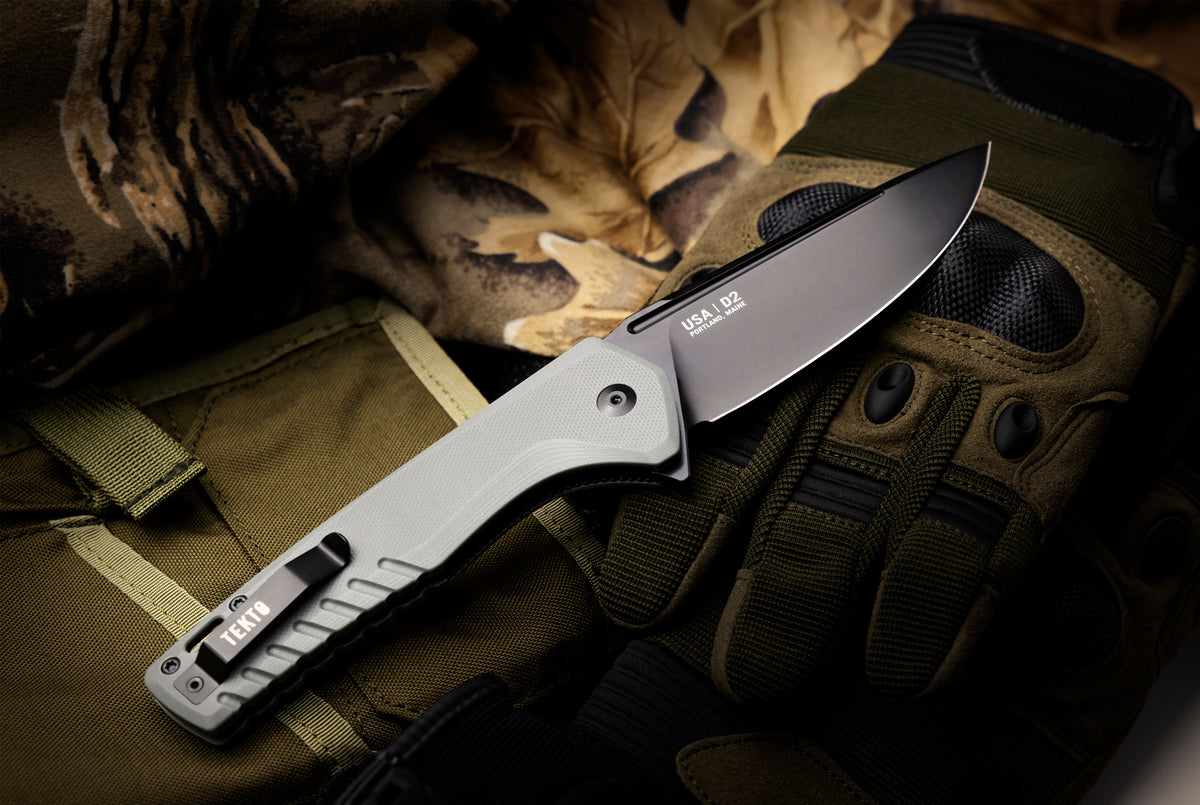
Shelter, food, tools, first aid, signals, fire and the trail: one knife does all seven, if it is the right knife. For the hard jobs a fixed blade wins, and the X1 Atlas, a 3.30-inch MagnaCut blade in a Kydex sheath, is the one we make for it. Carry a folder such as the F1 Alpha in the pocket as well. It is the knife you will reach for ten times a day. Our bushcraft vs survival guide explains the sizes. On your next trip, pack a knife. Your way home may depend on it.
The Knife to Pack
The X1 Atlas is the fixed blade for the hard jobs. A folder in the pocket backs it up.


People Are Asking
What is the best knife to carry for survival?
A fixed blade of 3.5 to 6 inches with a full-length tang, in a sheath you can reach. It batons, carves and pries where a folder cannot. The X1 Atlas is the TEKTO knife for that. Carry a folder as well, because the folder is the one you will use most.
Can I start a fire with a knife?
The knife makes the fire possible: it feathers dry sticks into tinder, splits damp wood to the dry core, and scrapes bark into fluff. A square spine will throw sparks from a ferro rod. It will not make fire by itself, so carry the rod or a lighter.
Should I carve trail markers into trees?
Only when you are lost and need to find your way back to a known point. In normal travel it damages trees and is illegal in many parks. Blazes, stacked rocks and snapped twigs do the job with less harm.





